Using your NDIS plan
Understand funded supports, identify priorities and prepare questions for providers, plan managers or the NDIA.
 Enquire ↗
Psychosocial recovery coaching
Recovery-oriented coaching for people living with psychosocial disability who want practical support with mental health, resilience, confidence and goals that matter to them.
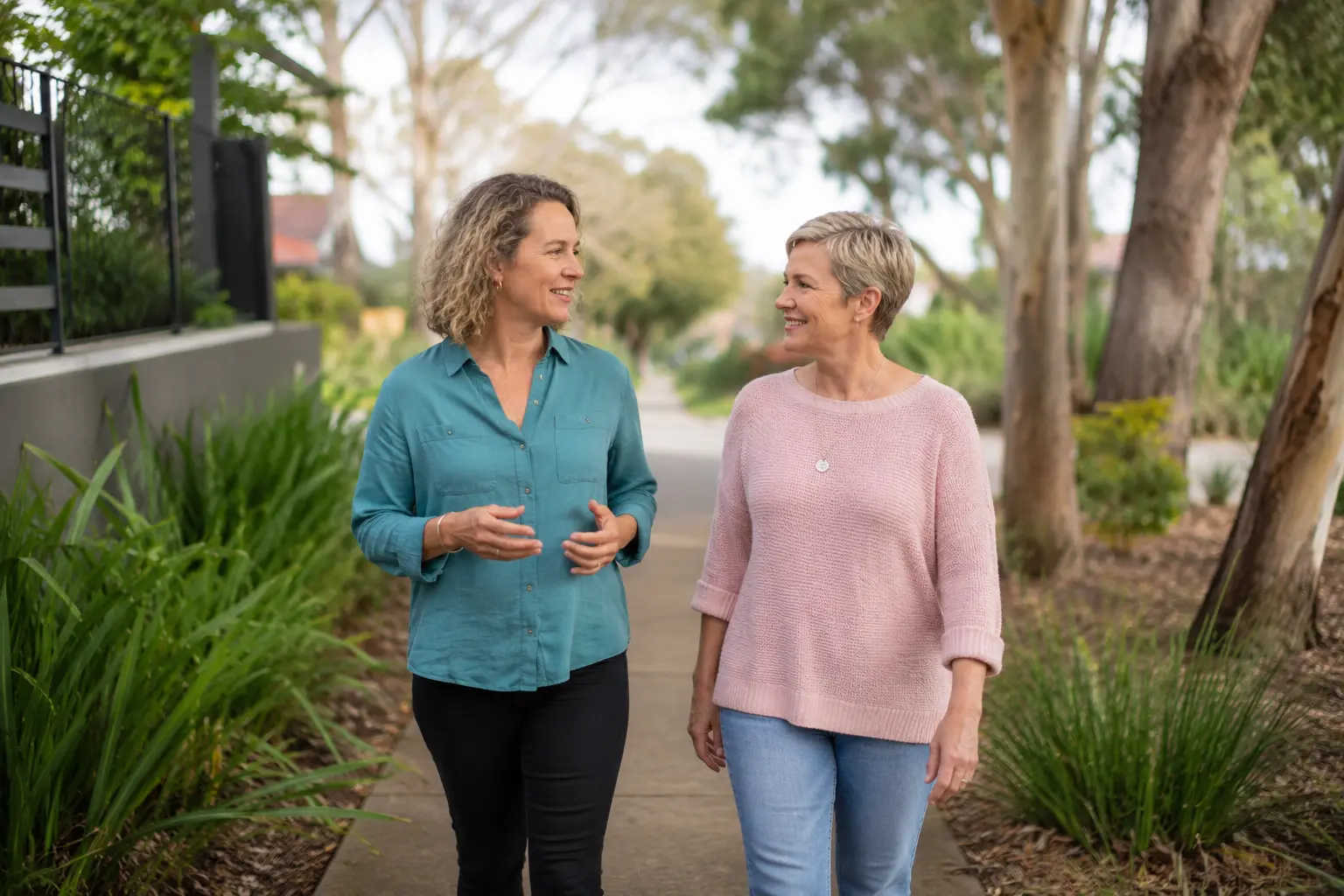
A human place to begin
Psychosocial recovery coaching works alongside you to identify strengths, make sense of services and turn goals into practical next steps.
Support may include understanding and using your NDIS plan, preparing for meetings, connecting with suitable mental health and community services, building routines and strengthening confidence in everyday decisions.
Our approach recognises lived experience, dignity of risk and the importance of relationships, identity and community. It is collaborative rather than directive.
How support may help
Recovery coaching is shaped around your circumstances and may include:
Understand funded supports, identify priorities and prepare questions for providers, plan managers or the NDIA.
Explore suitable mental health, mainstream, community and funded supports while keeping choice and consent central.
Practise decision-making, self-advocacy and communication so your voice is present in the systems around you.
Develop coping approaches, routines and practical strategies for responding to stress, supporting wellbeing and continuing towards personal goals.
Is this the right fit?
Suitability, goals, funding and service boundaries are discussed before support begins.
Kind words
“You have given me such a compassionate listening ear when I’ve been so up and down with my mental health.”
— Jenny, psychosocial recovery coaching client
What to expect
You, your nominee, family member or professional can make contact—with your knowledge and consent.
We discuss goals, funding, preferences, availability and whether recovery coaching is suitable.
Before services begin, we confirm consent, responsibilities and the agreed support arrangement.
Questions about this service
A recovery coach supports a person living with psychosocial disability to strengthen mental health, resilience, recovery, choice and participation, navigate services and work towards their goals.
Recovery coaching can support recovery planning, resilience, connection and practical strategies, but it does not replace clinical mental health assessment, diagnosis, treatment or crisis care.
It may include understanding your plan, identifying priorities, connecting with suitable supports and preparing for conversations with people involved in your plan.
Whole Warrior Solutions is phasing out standalone Support Coordination. Where suitable and within recovery-coaching scope, support may include understanding plans, connecting with services, coordinating with supports and building confidence to navigate systems. Recovery coaching is not represented as a separate Support Coordination service.
Yes, provided you know about the referral and consent to being contacted, or the person has lawful authority to act for you.
Take the next step
A complimentary 15-minute enquiry call can help you ask questions and decide whether this service may be a suitable fit.
This is an enquiry call, not a counselling or crisis-support session. If there is immediate danger, call 000.